
Free and Open Source

Completely free of cost and fully open source. Vitruvian stands on the shoulders of giants — built on Linux and inspired by Haiku and BeOS.

KISS

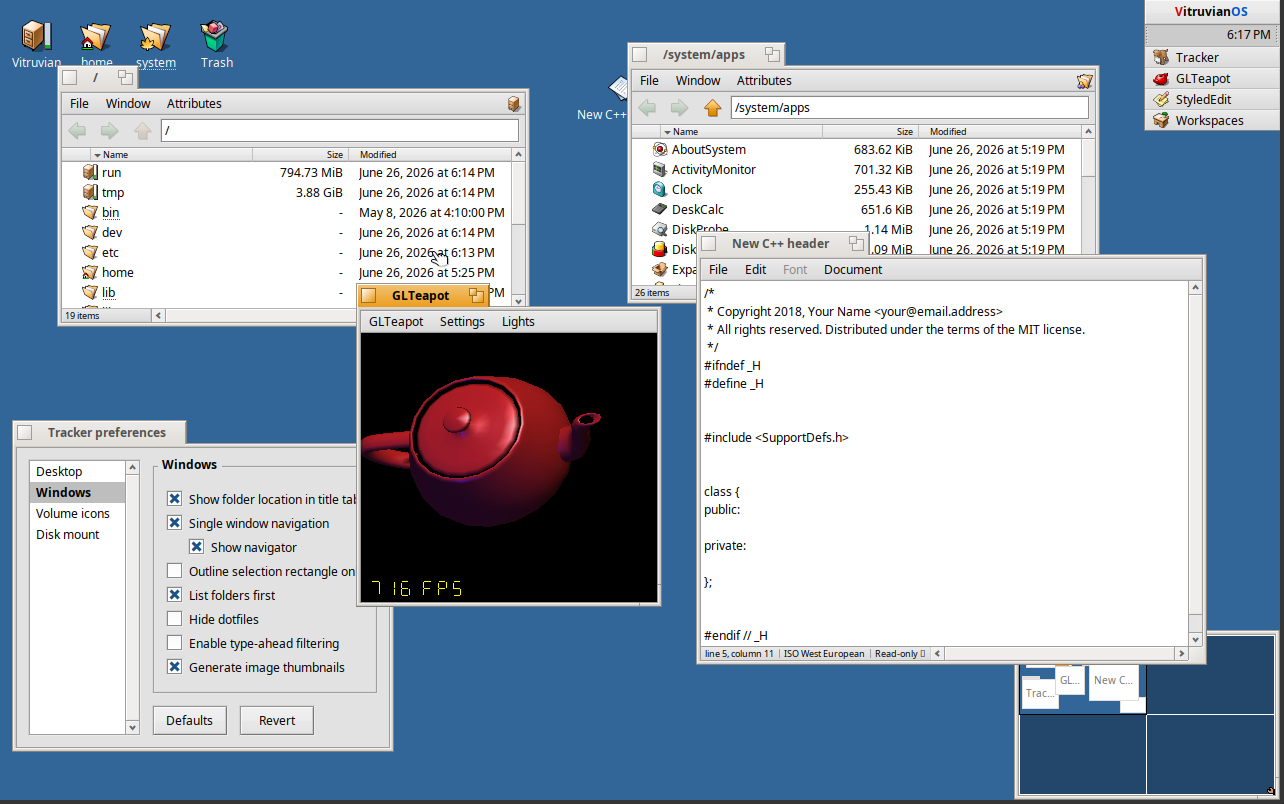
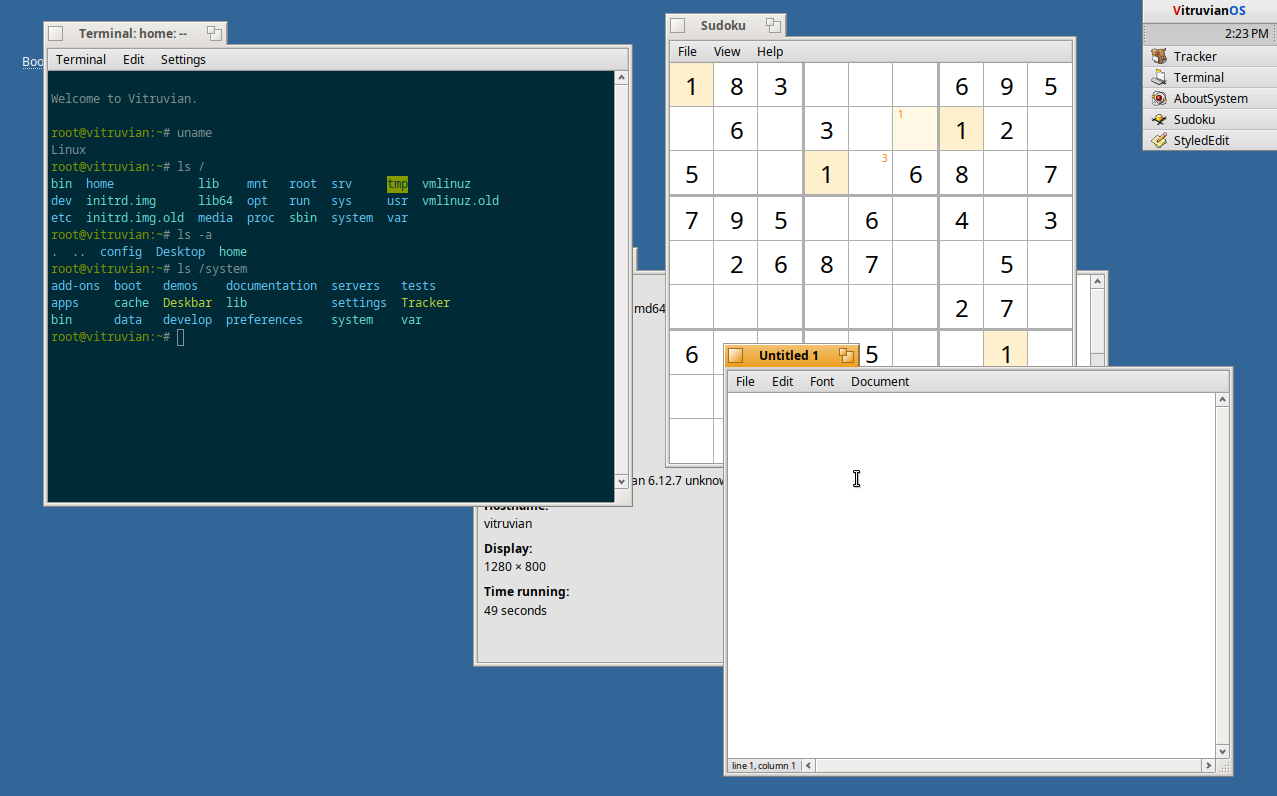
It’s very easy to use. It features an intuitive desktop and adopts KISS principles. Anyone can rapidly feel at home and use V\OS. User experience, workflow and comfort is key.

Home rule

It’s your computer, your rules. This is a key principle at V\OS. We don’t collect data, we don’t work against you. You’re the boss. Your operating system is designed to do what you want without getting in your way.

Community-centric

There is a tight bond and a great relationship between the development team and the community. We communicate with our users and constantly use their feedback to improve V\OS.

OOTB

Everything just works "Out Of The Box", without the need to configure anything or to install extra applications. It’s ready to go. Although it’s very configurable, everything is set and tuned nicely by default and no unnecessary questions are asked.

Nexus Kernel Bridge

Nexus is Vitruvian's custom Linux kernel subsystem that brings BeOS-style node monitoring, device tracking, and messaging to Linux — making it possible to run Haiku applications on a standard Linux kernel.

What is VitruvianOS?

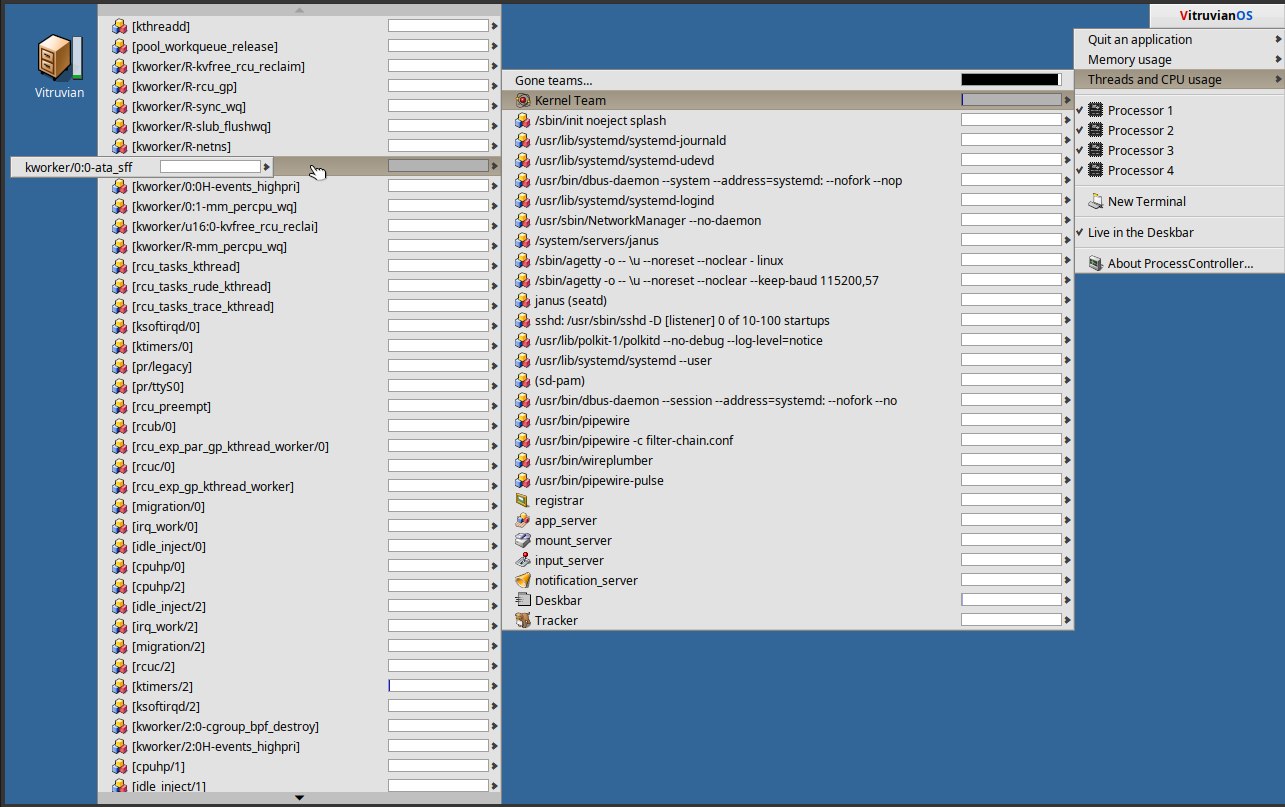
V\OS is an operating system based on linux heavily inspired by the BeOS, bringing the elegance and simplicity of a classic operating system to modern days. By leveraging the strengths of Linux while maintaining the user-friendly aspects of BeOS, V\OS offers a unique blend of performance and usability. V\OS leverages the power of linux by integrating ad-hoc built kernel modules and real time patches for a reactive and enjoyable user experience. V\OS supports the BeOS/Haiku runtime on Linux with minimal to no API changes.

The boot file systems supported are XFS and SquashFS including support for extended attributes. File system indexing and live queries are planned to be released later on. By default the system ships a linux kernel including real time patches while at the same time providing support for non-rt linux kernels.

Have any questions?

You can join our groups.

If you have questions, ideas, or want to contribute, you can join us on GitHub and Telegram.

Read FAQs